Document Category: Checklist

This checklist is a list of practices that will help guide your thinking about how to support the social-emotional development of young children who have experienced trauma.
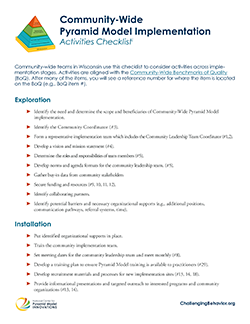
Wisconsin shared this checklist of community team activities across implementation stages.
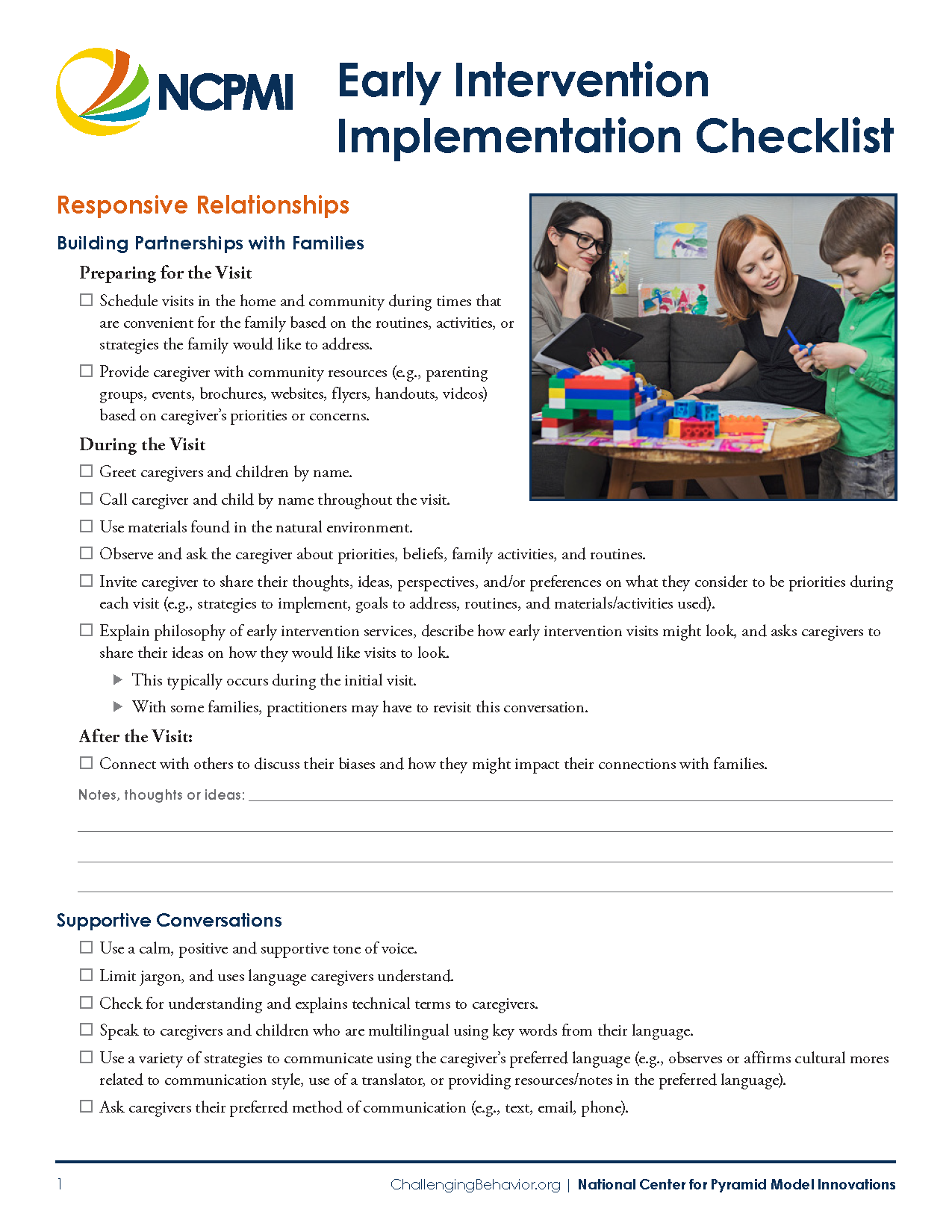
The Early Intervention Implementation Checklist is designed to align with the Early Intervention Pyramid Practices Fidelity Instrument (EIPPFI). Coaches and early interventionists can use this tool to support early interventionists’ self-reflection of the implementation of Pyramid practices, and prepare for shared goals and action planning.
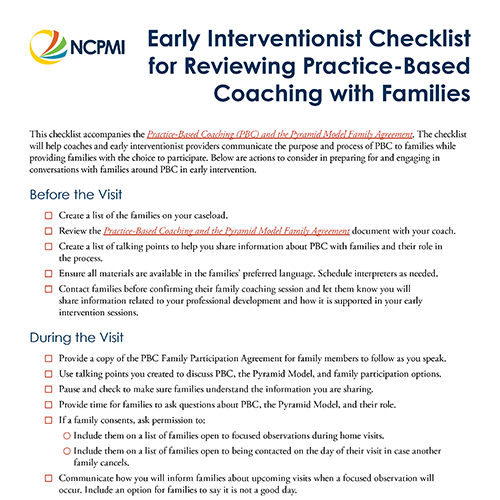
This checklist accompanies the Practice-Based Coaching and the Pyramid Model Family Agreement. The checklist will help coaches and early intervention providers create a plan to communicate the purpose and the process of Practice-Based Coaching (PBC) to families while providing families the choice to participate. Below are actions to consider in preparing for and engaging in conversation with families around PBC in early intervention.
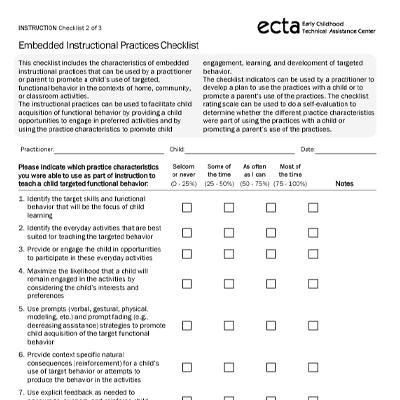
This checklist includes the characteristics of embedded instructional practices that can be used by a practitioner or parent to promote a child’s use of targeted, functional behavior in the contexts of home, community, or classroom activities
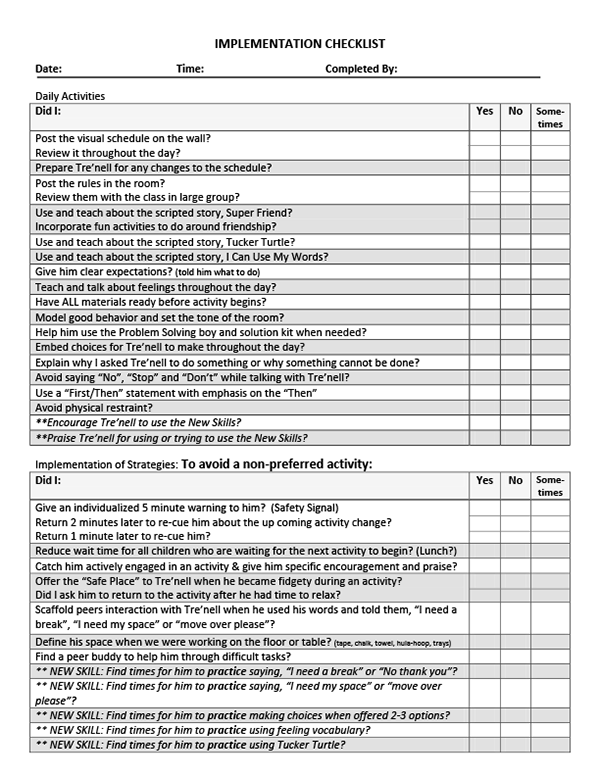
Sample of an implementation checklist for a behavior plan
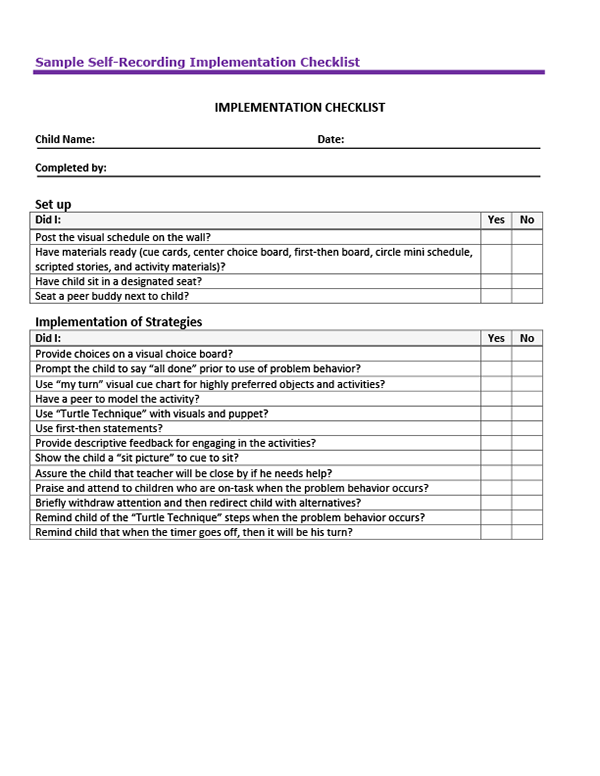
You might also want to develop a way to help the teacher with implementation fidelity. Check out this approach to using a data-based system for tracking implementation fidelity. The process involves identifying all the plan steps and then taking data on implementation.
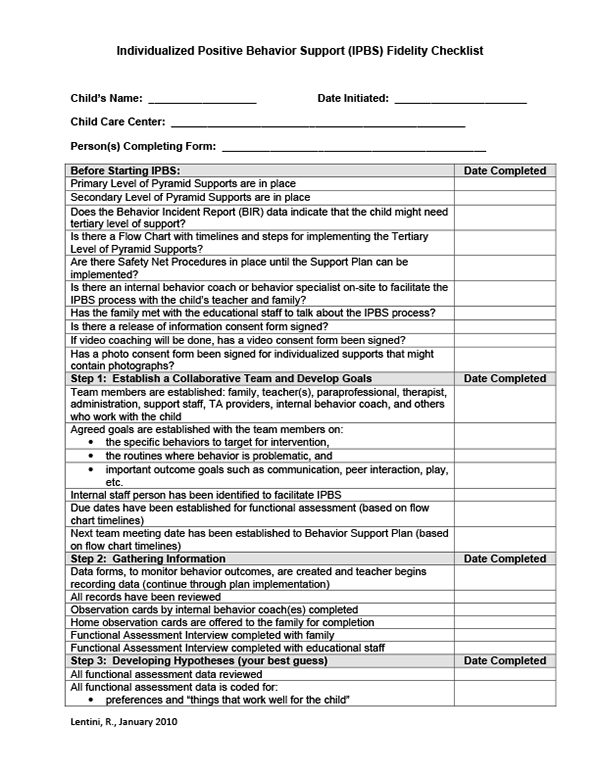
This is a checklist that will help you with the implementation of the behavior support plan development process.
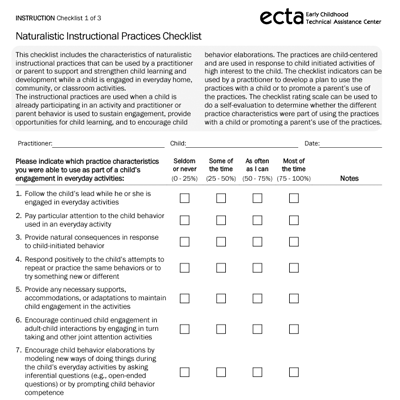
This checklist includes the characteristics of naturalistic instructional practices that can be used by a practitioner or parent to support and strengthen child learning and development while a child is engaged in everyday home, community, or classroom activities.
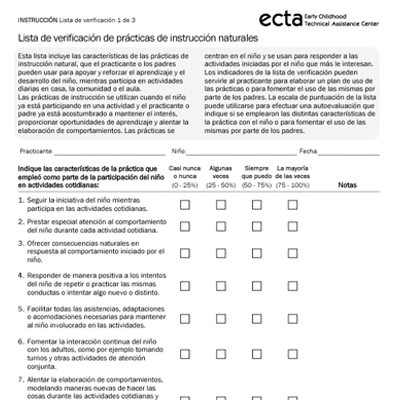
Esta lista incluye las características de las prácticas de instrucción natural, que el practicante o los padres pueden usar para apoyar y reforzar el aprendizaje y el desarrollo del niño, mientras participa en actividades diarias en casa, la comunidad o el aula.
This checklist includes the characteristics of naturalistic instructional practices that can be used by a practitioner or parent to support and strengthen child learning and development while a child is engaged in everyday home, community, or classroom activities.
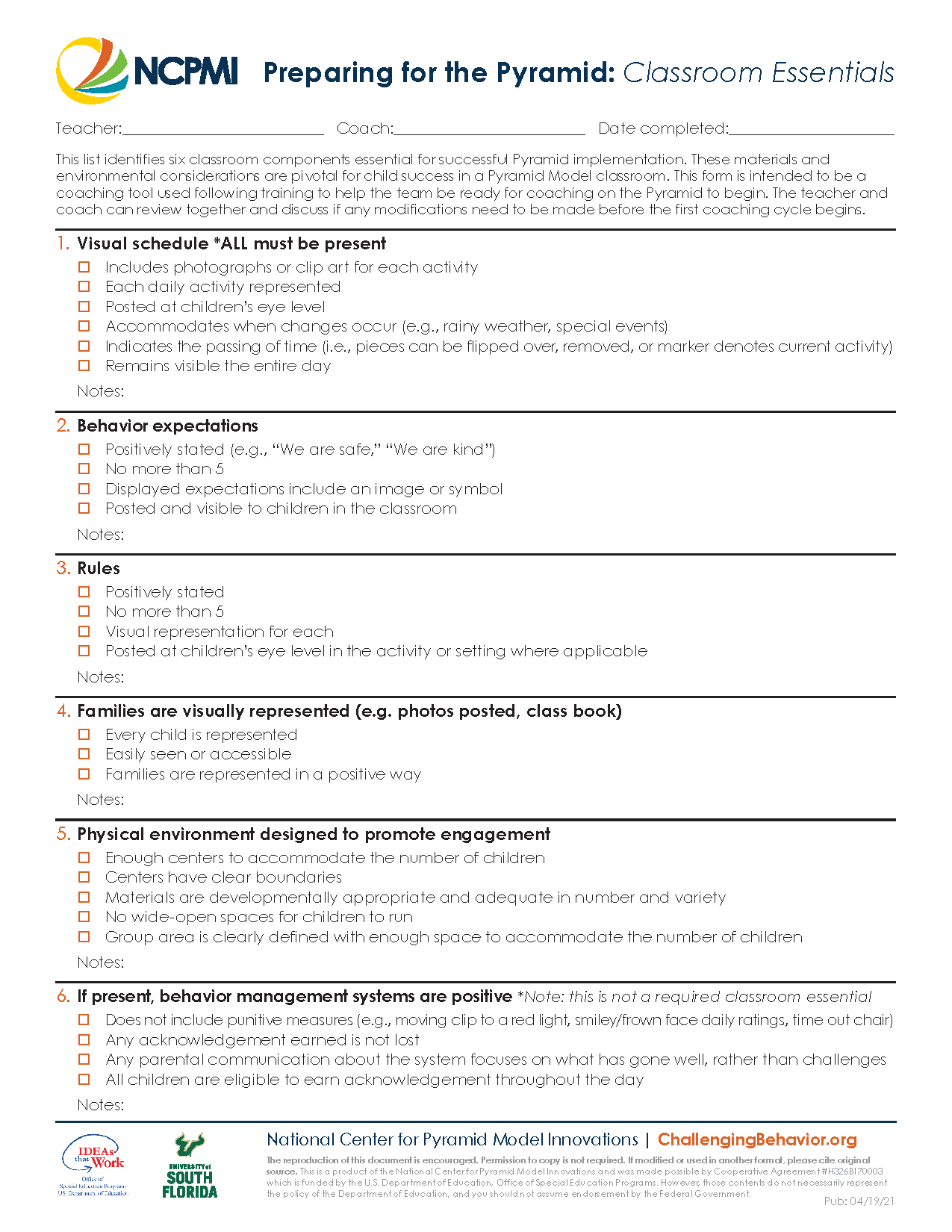
This list identifies five classroom components essential for successful Pyramid implementation. These materials and environmental considerations are pivotal for child success in a Pyramid Model classroom. This form is intended to be a coaching tool used following training to help the team be ready for coaching on the Pyramid to begin. The teacher and coach can review together and discuss if any modifications need to be made before the first coaching cycle begins.
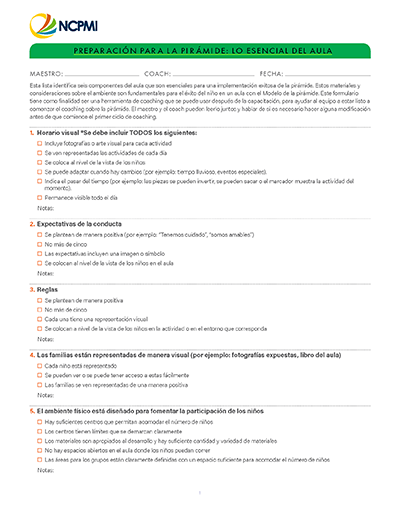
This list identifies five classroom components essential for successful Pyramid implementation. These materials and environmental considerations are pivotal for child success in a Pyramid Model classroom. This form is intended to be a coaching tool used following training to help the team be ready for coaching on the Pyramid to begin. The teacher and coach can review together and discuss if any modifications need to be made before the first coaching cycle begins.
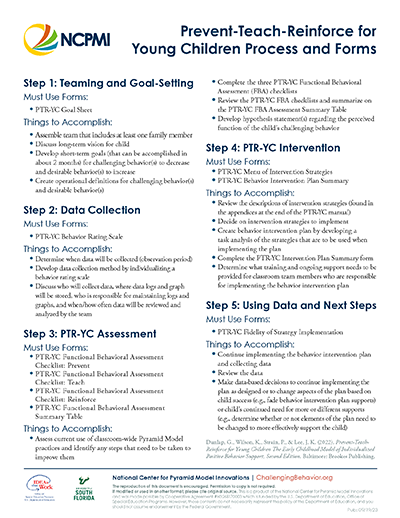
This handout contains the forms and things to accomplish within each step of the PTR-YC process.

This resource provides family child care home providers with best practices that can be used to support children at each tier of the Pyramid Model.

This checklist provides teachers with guidance about using Pyramid Model practices within virtual learning.
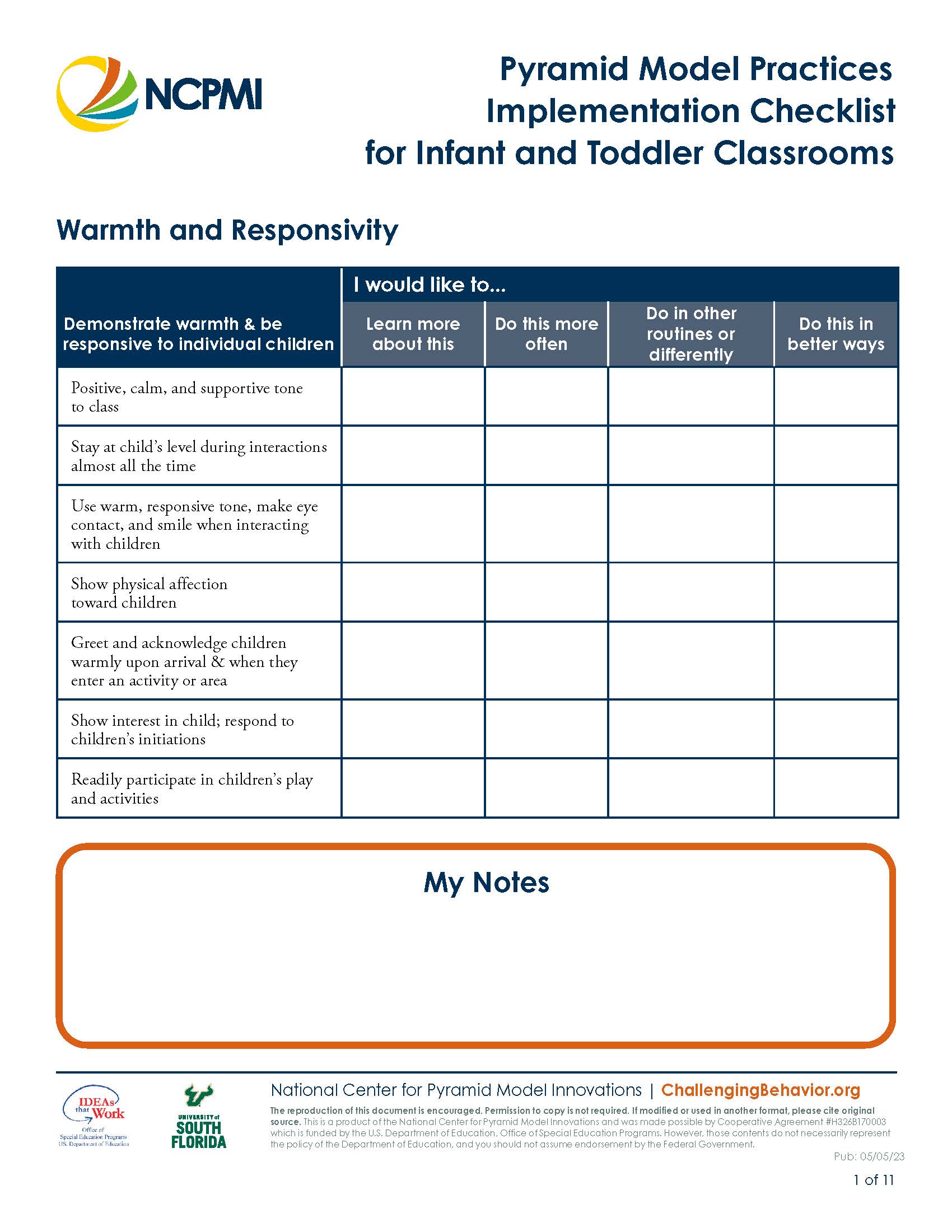
The Pyramid Model Practices Implementation Checklist for Infant and Toddler Classrooms is a tool designed to be used by practitioners to identify training and/or classroom implementation needs in eight areas. The checklist encourages individual self-reflection and discussion between classroom teachers and practitioner coaches.
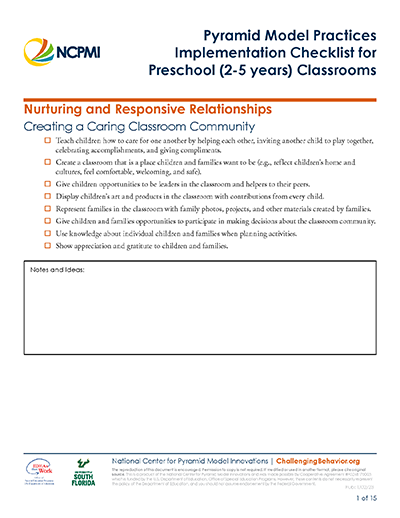
The Pyramid Model Implementation Checklist is a tool designed to be used by practitioners to identify training and/or classroom implementation needs in seven areas: Responsive Relationships; Predictable Daily Schedules; Creating Effective Classroom Routines; Teaching Behavior Expectations across Classroom Routines; Teaching Social and Emotional Skills; Systematic Instructional Strategies; and Function-Based Assessment and Intervention Planning. The checklist encourages individual self-reflection and discussion between classroom teachers and practitioner coaches.
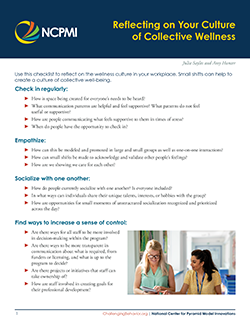
A checklist to reflect on the wellness culture in your program.
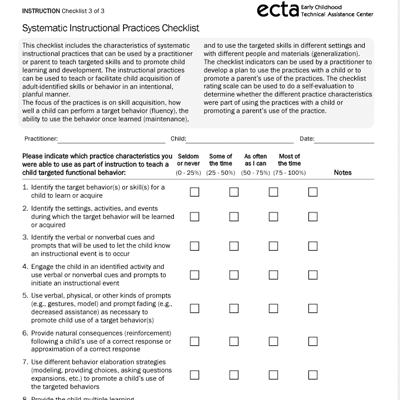
This checklist includes the characteristics of systematic instructional practices that can be used by a practitioner or parent to teach targeted skills and to promote child learning and development. The instructional practices can be used to teach or facilitate child acquisition of adult-identified skills or behavior in an intentional, planful manner.